Event postpone
Participating is very simple: just complete the registration form using the link below. You will then receive the Zoom access link approximately 24 hours before the event.
Registration : https://forms.gle/HkyNGdGS8B36cbNLA
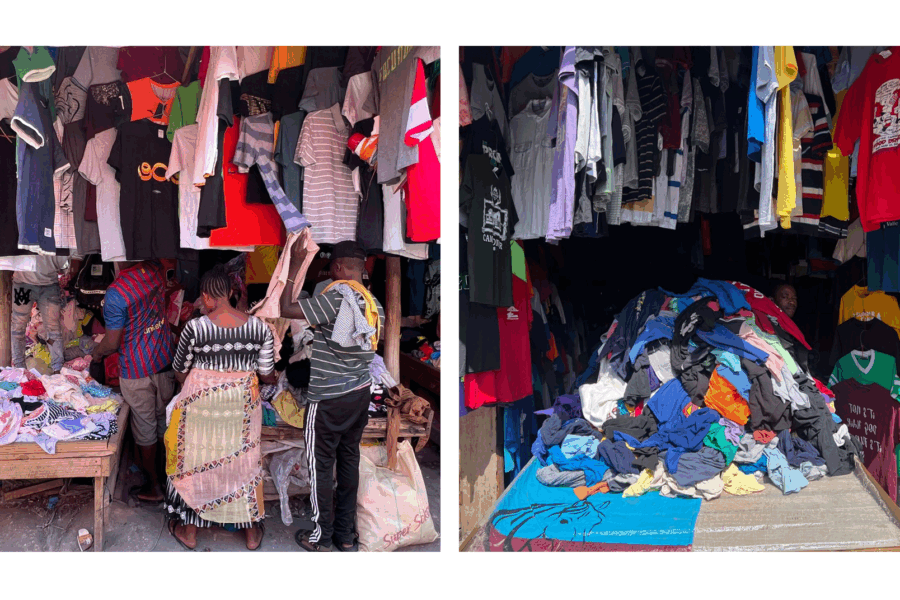
Join Africa 21 for a lively roundtable with experts from across the textile value chain as they unpack the outcomes of the OEWG discussions and examine what they mean in practice. Do the proposed measures reflect the realities of different markets? Are they operationally feasible? Where can interventions deliver the greatest environmental impact? And could well-intentioned policies unintentionally undermine existing circular systems, reverse progress in reuse and recycling, or affect the livelihoods of millions who depend on the trade?
Bringing together perspectives from Global North, West Africa, and East Africa, this discussion will explore the evidence behind competing narratives, the role of data and traceability, and what comes next for textiles, trade, and circularity. A must-attend session for journalists covering sustainability, development, trade, and the circular economy.
Moderator: Jennifer Wang is the founder of Full Cycle Resource Consulting and a circular economy specialist
Speakers :
- Teresiah Wairimu Njenga, Chairman, Mitumba Consortium Association of Kenya
- Marlvin Owusu, Executive Member, Ghana Used Clothing Dealers’ Association (GUCDA)
- Jessica Franken, Vice President of Government & External Affairs for the Secondary Materials and Recycled Textiles Association (SMART) and President of The Franken Group
Biographies of our speakers
 |
Jennifer Wang is the founder of Full Cycle Resource Consulting and a circular economy specialist with more than 11 years of experience working across Africa, Asia, and Latin America. She specializes in waste management, textile value chains, and evidence-based policy development.
Under the Sustainable Manufacturing and Environmental Pollution (SMEP) Programme, Jennifer led research on second-hand clothing markets in East Africa, examining textile flows, waste generation, and socioeconomic impacts across formal and informal markets. Beyond the SMEP Programme, she has conducted research and advisory work in Central America and on global textile supply chains, focusing on traceability, trade flows, and circular economy interventions. Her work aims to generate granular data and practical insights to support informed policymaking and ensure that circular economy solutions are grounded in scientific evidence and market realities. |
 |
Teresiah Wairimu Njenga, Chairman, Mitumba Consortium Association of Kenya
Apostle Rev Teresia Wairimu Njenga is the founder of the Synagogue of Hope Church and ministry in Nairobi. She is a televangelist and also doubles as the Director of Give Hope TV that broadcasts across Kenya. Teresia has been in the Mitumba business for the last 20 years, where she started off her business with a capital of KSh 3,000. Teresia and her husband have grown the business to become importers of second-hand clothes, importing from Canada, USA, Europe and China. |
 |
Marlvin Owusu, Executive Member, Ghana Used Clothing Dealers’ Association (GUCDA)
Marlvin Owusu is an Executive Member of the Ghana Used Clothing Dealers Association and a dedicated importer of second hand clothing. As the second-generation leader in his family’s used clothing business, Marlvin has been actively engaged in the trade for over six years. In addition to his work in the clothing industry, he is an entrepreneur with interests in real estate investment. Marlvin holds a BSc in Business Studies from the University of Portsmouth and a Master’s degree in Business Economics from City University, London. Before fully committing to the used clothing trade, he spent four and a half years in Corporate Banking at Fidelity Bank, Ghana. He also has significant work experience in the UK. Through his work, Marlvin aims to highlight the vital role the second-hand clothing industry plays in advancing sustainability and generating significant socio-economic benefits. |
 |
Jessica Franken, Vice President of Government & External Affairs for the Secondary Materials and Recycled Textiles Association (SMART) and President of The Franken Group.
She has more than 25 years of experience in government relations, public policy, and strategic advocacy. She is a recognized leader in textile circularity policy, with a particular focus on textile Extended Producer Responsibility (EPR), international trade, and policies that support reuse, recycling, and sustainable materials management. Jessica has been deeply engaged in the development of textile EPR legislation across the United States and represents the textile reuse and recycling industry in international discussions related to the Basel Convention and other global initiatives addressing used textiles and circular economy policy. She regularly works with policymakers, industry stakeholders, and international organizations to advance evidence-based solutions that strengthen circular systems while preserving the environmental, economic, and social benefits of textile reuse. A respected industry spokesperson, Jessica has participated in dozens of media interviews on textile sustainability, secondhand trade, and circular economy issues, including appearances on BBC Radio and other national and international media outlets. She has authored more than 150 policy articles, testified before legislative bodies, and secured significant legislative and regulatory victories on environmental, trade, manufacturing, and labor issues throughout her career. Prior to her current role, Jessica worked on Capitol Hill and represented industries including recycled textiles, nonwoven fabrics, and electric vehicles. She is known for building coalitions, forging bipartisan compromises, and developing practical, forward-looking policy solutions. Jessica formerly served for many years as a cleared advisor to the U.S. Trade Representative’s Industry Trade Advisory Committee (ITAC) for Textiles and Clothing and serves on numerous advisory groups focused on textile traceability, materials recycling, and circular economy initiatives. She holds a Master of Public Policy from George Mason University, where she was the sole recipient of the Alexis de Tocqueville Award for academic excellence, and a Bachelor of Arts in Government and Politics from the University of Maryland. |
Reference materials
- Trade in secondhand clothing : analysis of markets in Uganda, the United Republic of Tanzania and the United States of America; SMEP Programme, UNCTAD, April 2026.
- Secondhand clothing markets: an overview in Uganda and the United Republic of Tanzania; SMEP Programme, UNCTAD, November 2024.
- A study of textile waste at Owino Market, Kampala – towards a circular
textile economy in Uganda; SMEP Programme, UNCTAD, 2024. - Pr. Patrick Diamond; The quality of second-hand clothes imported to Kenya and the Associated Environmental Impacts; Information Research Solutions Nairobi, September 2023.
- An evaluation of the socio-economic and environmental impact of the second-hand clothes trade in Ghana, Ghana Used Clothing Dealers Association.
- Christoph Engelhardt, Elisa Berste, Florian Kölsch; Used textiles at Kantamanto market; SETTS, GIZ, May 2024.
- Mathias Gustavsson and Amanda Martvall ; Implications for the kenyan Mitumba market from introduction of Basel Convention rules in trade of second-hand clothing; Swedish Environmental Research Institute, June 2025,